
Two high objectives in ten days
Most Circuit itineraries have one summit moment. This one has two. Four days in you leave the main trail at Manang, walk up the Khangsar valley, and climb to Tilicho Lake at 4,919 m, a frozen glacial sheet in a basin under Tilicho Peak. Then you come back to the main route and cross Thorong La at 5,416 m.
The order is not decorative. Tilicho comes beforethe pass, and that is what lets a ten-day itinerary work: you sleep at Tilicho Base Camp (4,150 m) and touch nearly 4,919 m days before you need to be at 5,416 m. Done the other way round it would be reckless.
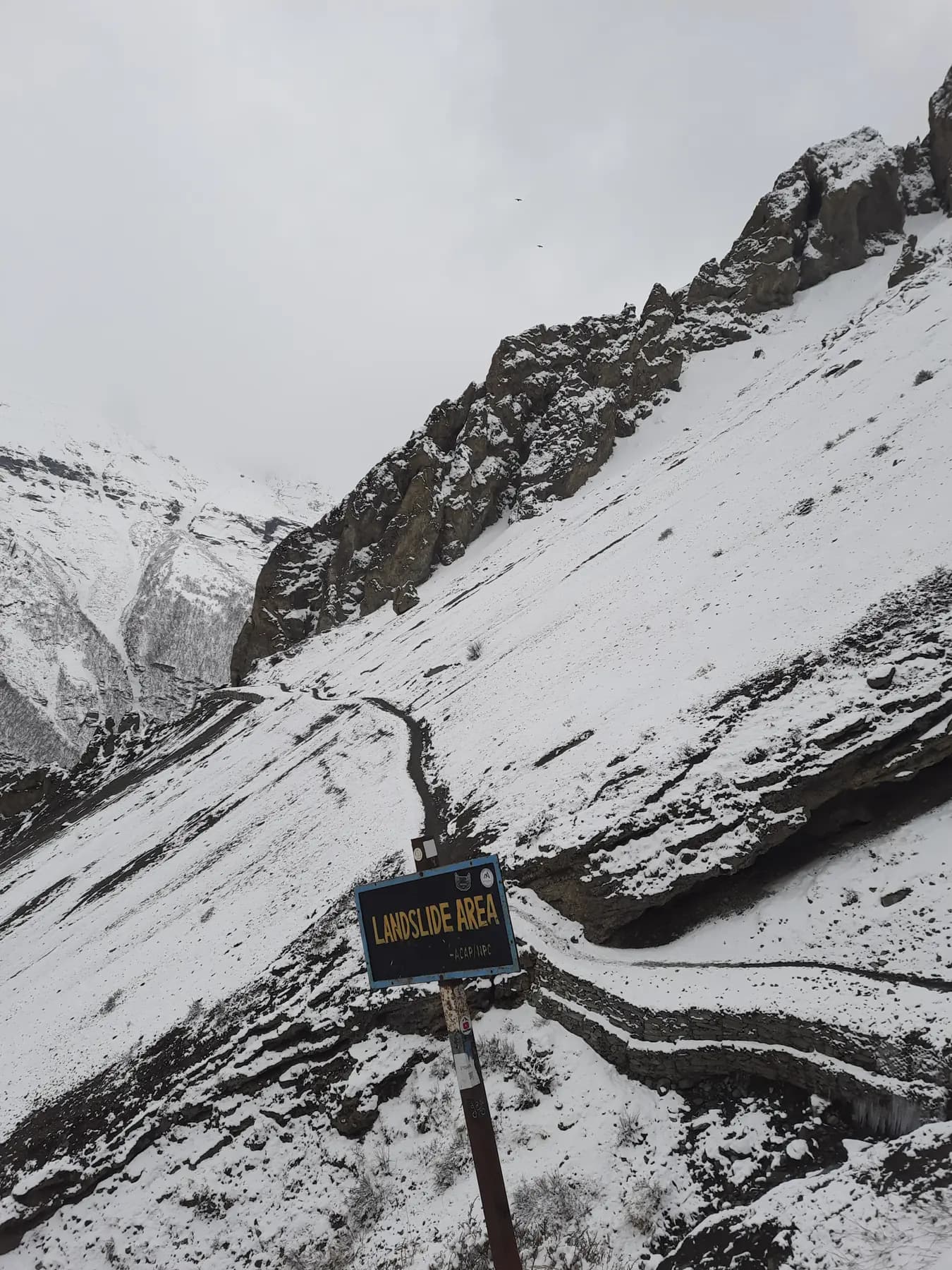
The walk in is half the appeal. From Khangsar the trail crosses an exposed traverse carved into a crumbling hillside, the section every trekker photographs, before dropping to Tilicho Base Camp. Khangsar and the base camp are quiet in a way the main trail no longer is.
10-day itinerary, day by day
| Day 1 | Pokhara → Besisahar (760 m) → Chame (2,670 m) by jeep, 9–11 h |
|---|---|
| Day 2 | Chame → Upper Pisang (3,300 m), 5–6 h |
| Day 3 | Upper Pisang → Ghyaru (3,730 m) → Ngawal → Manang (3,540 m), 6–7 h |
| Day 4 | Manang, village morning, then Khangsar (3,750 m), 2–3 h |
| Day 5 | Khangsar → Shree Kharka → Tilicho Base Camp (4,150 m), 4–5 h |
| Day 6 | Tilicho Lake (4,919 m), then down to Shree Kharka, 7–9 h |
| Day 7 | Shree Kharka → Yak Kharka (4,050 m), 5–6 h |
| Day 8 | Yak Kharka → Thorong Phedi (4,450 m) / High Camp (4,880 m), 3–4 h |
| Day 9 | Thorong La (5,416 m) → Muktinath (3,760 m), 7–10 h |
| Day 10 | Muktinath → Pokhara by jeep, 6–9 h |
Days 1–3: Pokhara → Chame → Upper Pisang → Manang (3,540 m)
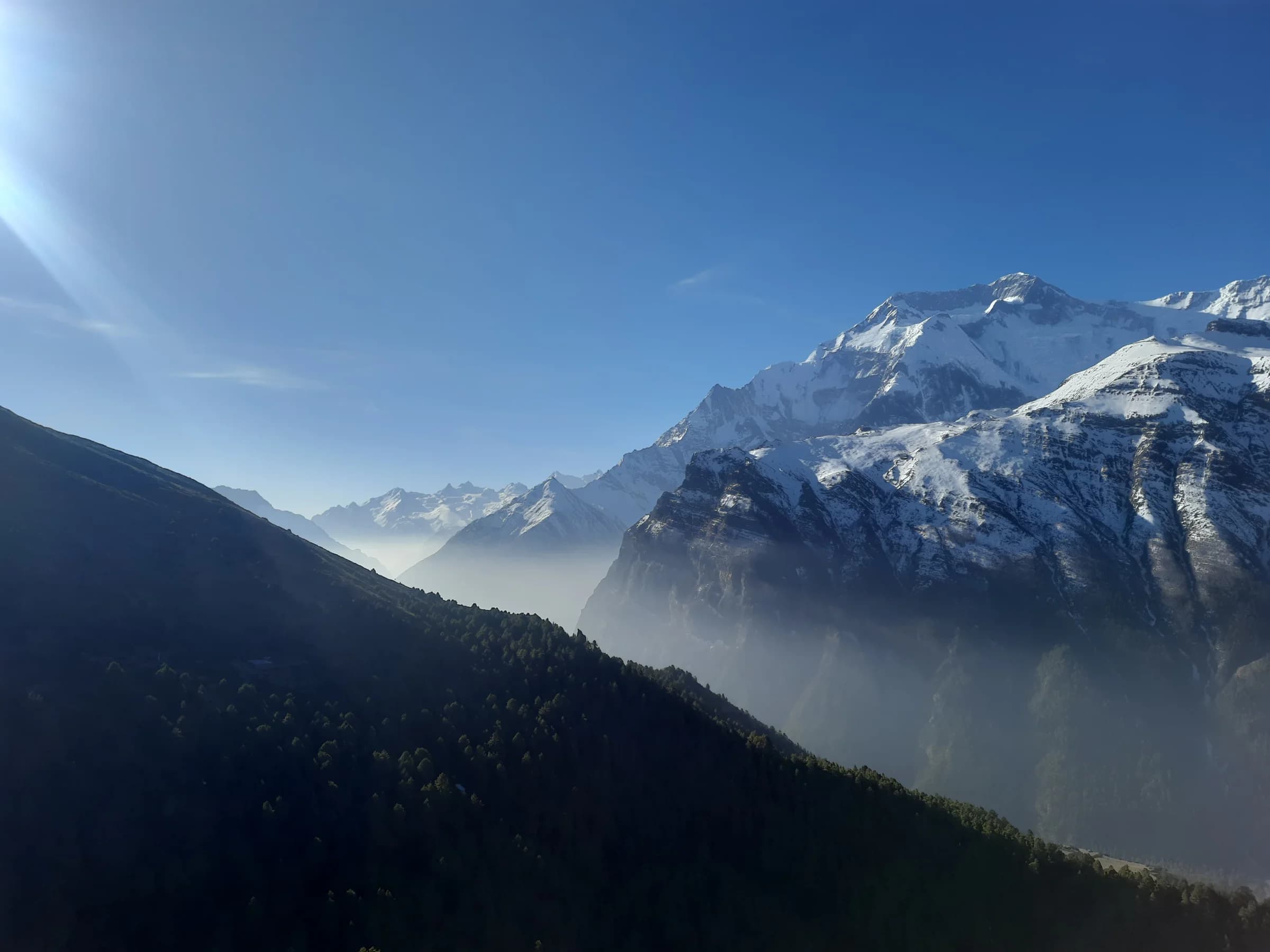
A long jeep day to Chame, nine to eleven hours in total, then two days of walking: up through blue pine to Upper Pisang, then the high route over Ghyaru and Ngawal into Manang. You touch 3,730 m on day 3 and sleep at 3,540 m, which is the first real acclimatisation of the trek.
Day 4: Manang morning, then Khangsar (3,750 m)
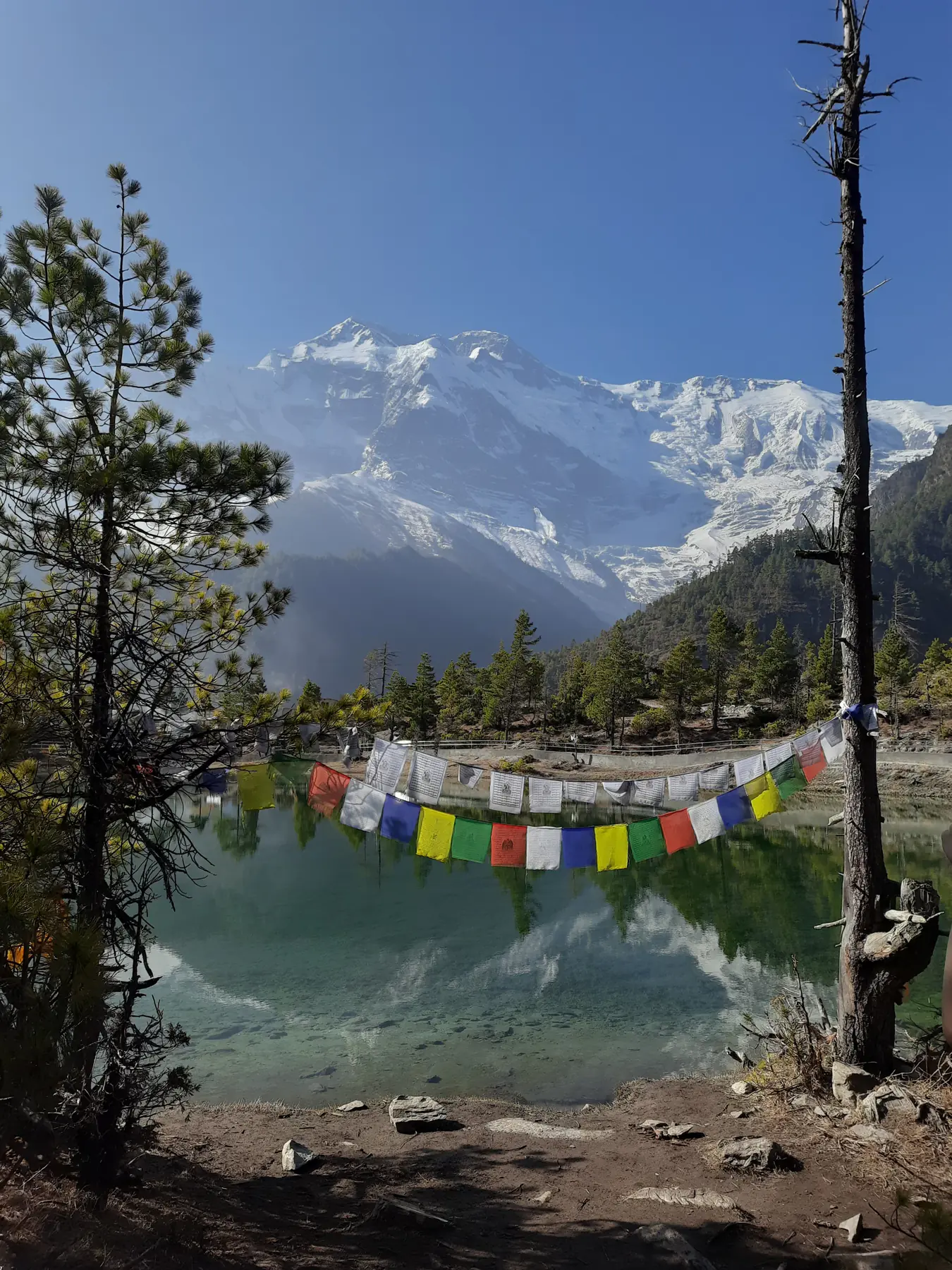
A gentle day by design. The morning goes on Manang itself, Gangapurna Lake and the Braga monastery, then two to three hours up the side valley to Khangsar, the last real village before Tilicho. You have gained only 210 m of sleeping altitude, which is exactly right this early.
Day 5: Khangsar → Tilicho Base Camp (4,150 m)
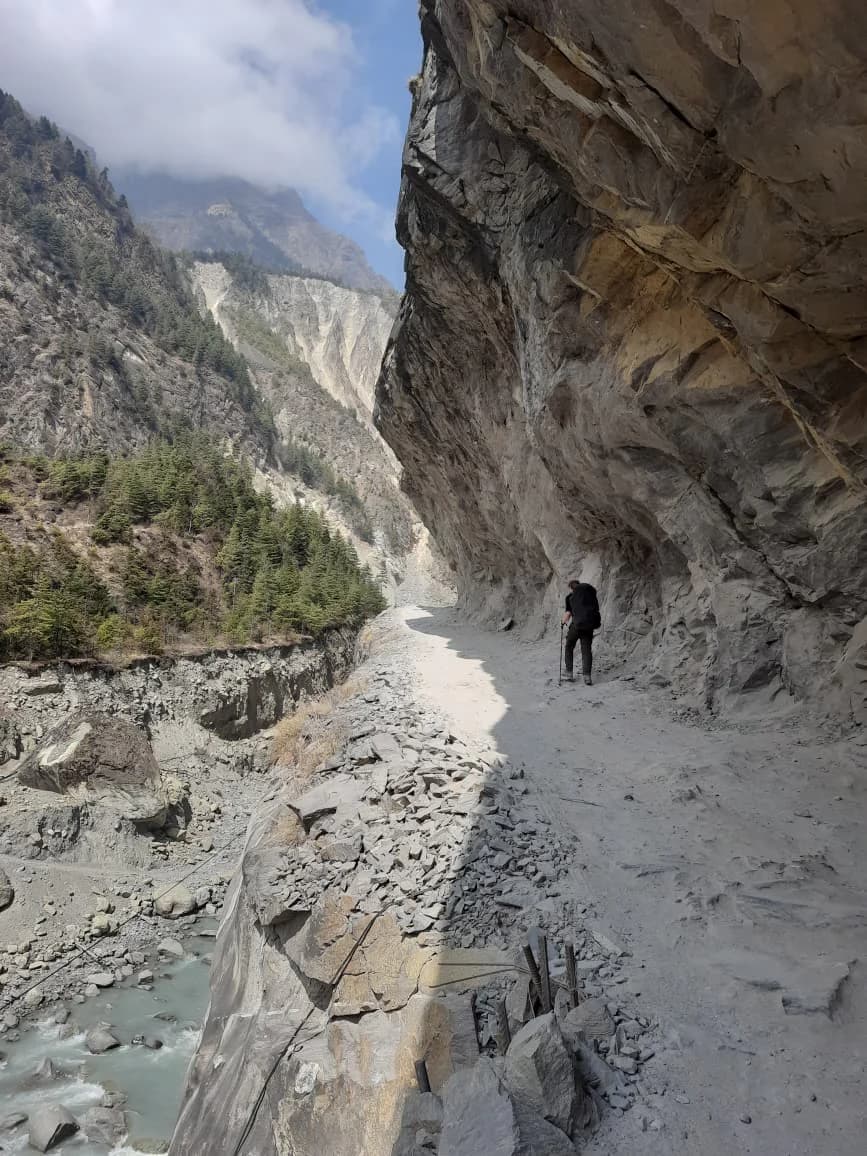
Four to five hours, with lunch at Shree Kharka (4,050 m). The famous section comes after: a long traverse cut into loose, crumbling ground with a serious drop below it. It is not technical and there is no rope, but it demands attention and it is no place to be in a hurry.
Day 6: Tilicho Lake (4,919 m), then Shree Kharka
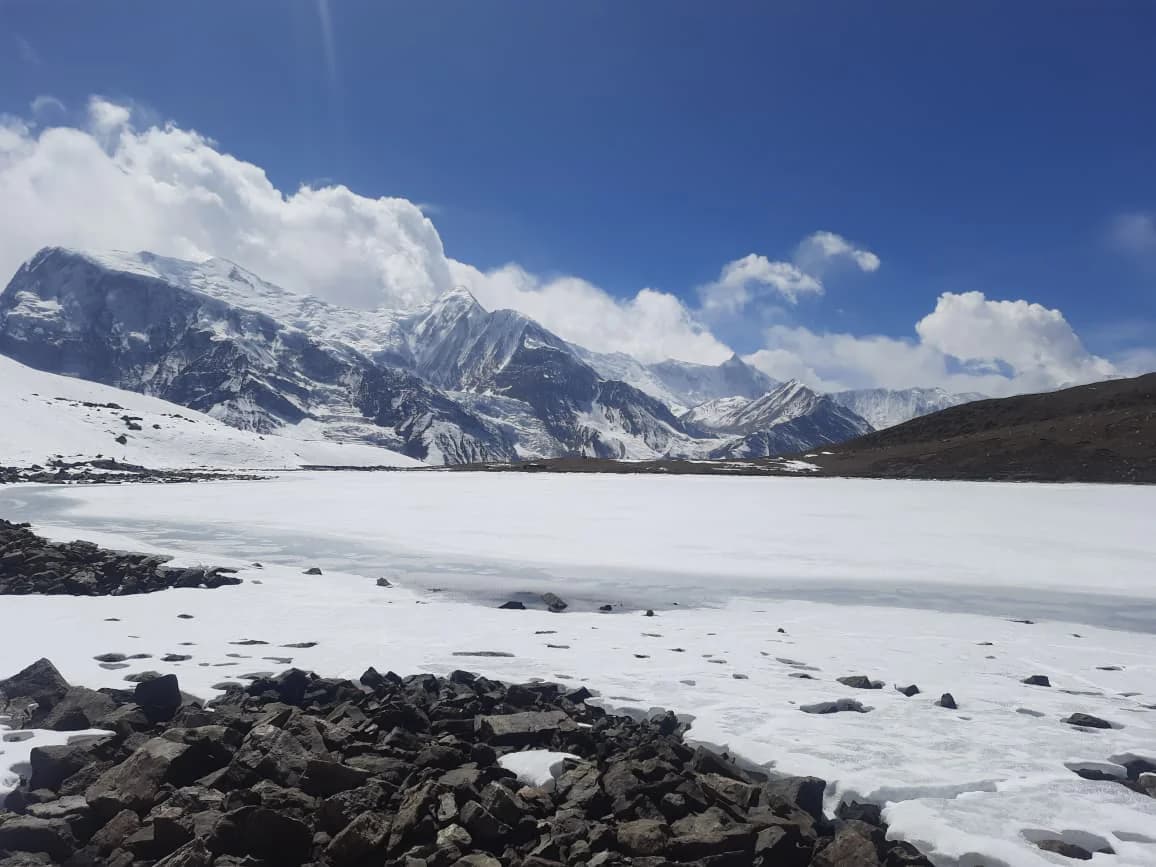
The big day. Three to four hours of steady zig-zag climbing from Base Camp to the lake, where you are only 500 m below the pass and standing at one of the highest large lakes on earth. Then two to three hours back down, and one to two more on to Shree Kharka.
Seven to nine hours all told, including time at the lake. It is cold, it is windy, and it is the photograph you will still be showing people in ten years.
Days 7–8: Shree Kharka → Yak Kharka → Thorong Phedi / High Camp
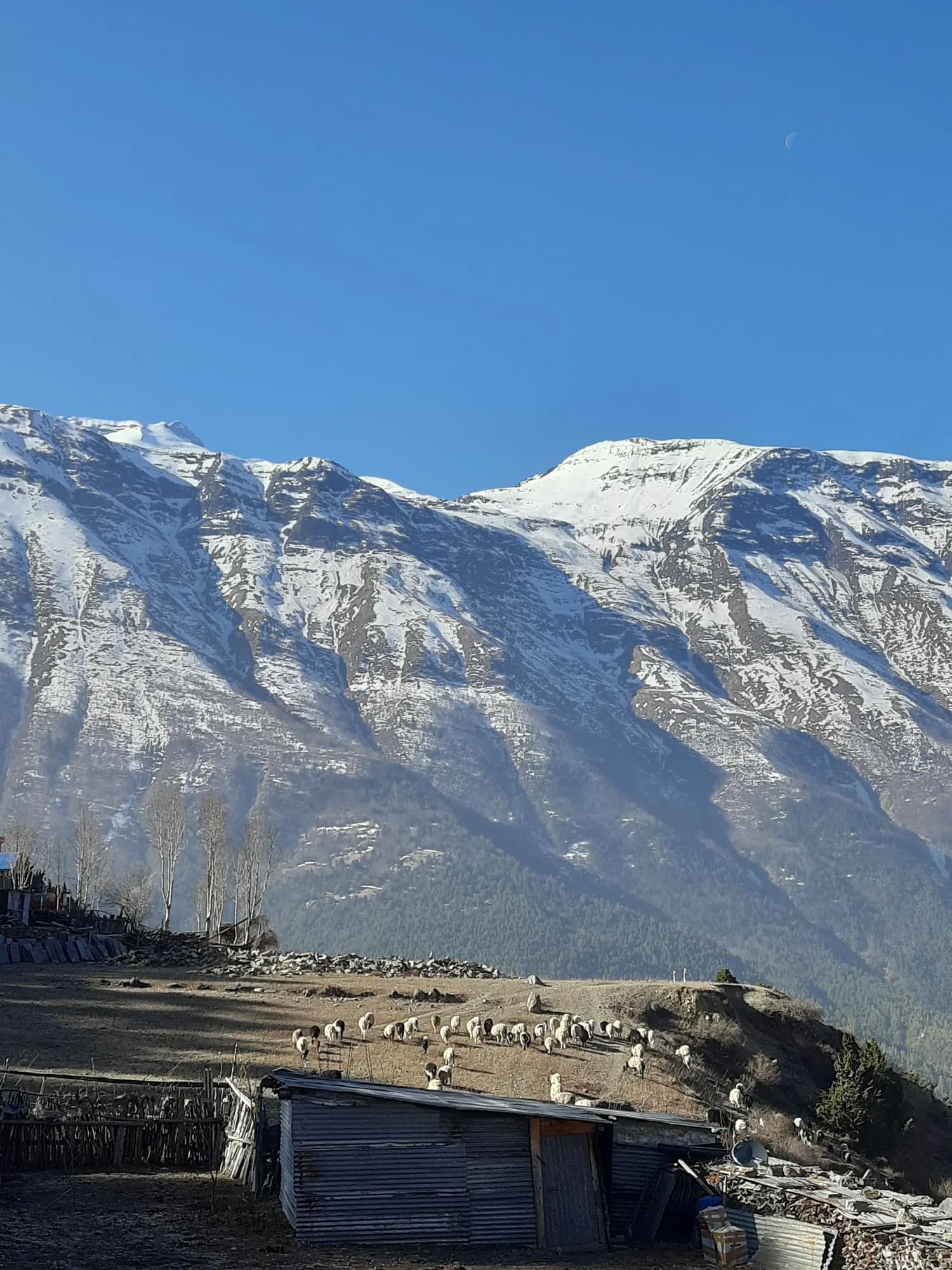
Back down past Khangsar and across to rejoin the main Circuit at Yak Kharka (4,050 m), five to six hours, then a short day up to Thorong Phedi (4,450 m), with the option of High Camp (4,880 m) an hour or so higher if the group is strong and beds are free.
Days 9–10: Thorong La (5,416 m) → Muktinath → Pokhara
A pre-dawn start, a long climb to the flags at 5,416 m, then 1,650 m of descent into the Mustang rain shadow. Seven to nine hours from High Camp, eight to ten from Phedi. The last day is six to nine hours by jeep down the Kali Gandaki to Pokhara.
Tilicho is nearly as high as the pass
Tilicho Lake at 4,919 mis only about 500 m below Thorong La. That cuts both ways.
- You sleep at Tilicho Base Camp (4,150 m), higher than Yak Kharka on the standard route, three nights before the pass
- You walk to 4,919 m and sleep back down at 4,050 m, which is climb-high-sleep-low at the exact altitude where it helps most
- It is a genuine high day in its own right, not a warm-up, and anyone feeling the altitude at Base Camp should say so rather than push on
There is no separate rest day in this itinerary. That is deliberate, not an oversight: the Tilicho detour does the work a Manang rest day would do, and does more of it. If you would rather have both, the 11-day lakes route adds a Manang night and three more lakes.
How acclimatisation actually works, and what to do if it goes wrong, is on our altitude sickness guide.
Who the Tilicho route is best for
- Trekkers who want more than the standard Circuit without adding a fortnight
- Anyone who has been to altitude before and is comfortable with a schedule that has no rest day
- Photographers, because Tilicho is the best single frame on the whole route
- Walkers who want quiet trail, since the Khangsar valley sees a fraction of the traffic
If you are new to altitude, or you want slack in the schedule, take the 11-day version. If your leave will not stretch past a fortnight, the 8-day Circuit keeps the pass and drops Tilicho.
