Our editorial standards
This site tells people how to walk over a 5,416 m pass. Trekkers have died on Thorong La, most notably in the October 2014 snowstorm. That makes a large part of what we publish safety content, not marketing copy, and it has to be held to a different standard.
Four commitments govern everything here:
- Accuracy over persuasion. Where a fact is inconvenient for selling treks, we publish the fact.
- Sourcing. Altitude, medical and fatality claims trace to a named authority, not to industry folklore.
- Transparency. We say who wrote a page, when it was last reviewed, and what we are unsure about.
- Correction. When we are wrong we fix it in place and say that we did.
How we source safety and altitude information
For anything involving your body at altitude, we work from recognised authorities rather than from what other trekking sites say:
- Wilderness Medical Society, consensus guidelines on preventing and treating acute altitude illness, the standard reference for AMS, HAPE and HACE
- Himalayan Rescue Association, the organisation running the aid posts trekkers in this region actually use, including at Manang
- The Lake Louise Acute Mountain Sickness score, the scoring system used to grade AMS severity
- NHS and UK travel-health guidance, for anything a UK trekker should raise with a GP or travel clinic
- Nepal Tourism Board and the Annapurna Conservation Area Project, for permits, fees and regulation
Where a number varies with season or exchange rate (permit fees, helicopter costs, teahouse prices), we publish a range and say it is a range. We do not invent precision we do not have.
What we will not do: state a fatality figure, a rescue statistic or a medical dosage without a source behind it.
Our use of AI tools, and where we do not use them
We use AI assistance for drafting and editing ordinary prose: tidying a paragraph, tightening a description, checking readability.
We do not let AI generate safety facts. Every altitude figure, symptom description, medication reference, ascent profile and fatality claim on this site is checked by a human against one of the sources above before publication. Language models are confidently wrong about exactly this kind of detail, and the consequence of a hallucinated altitude or dosage on a page like our altitude sickness guideis not a bad user experience. It is a person making a dangerous decision at 4,800 m.
We would rather disclose this plainly than let you assume it.
Review and update schedule
| Safety and altitude pages | Reviewed at least annually, and immediately after any reported incident on the route |
|---|---|
| Permits, fees and prices | Reviewed each season, because these change |
| Itineraries | Reviewed after each trekking season against what our guides actually walked |
| Everything else | Reviewed annually |
Safety pages carry a "last reviewed" date. If a page you are reading does not, treat it as not yet through this process and ask us directly.
Conflicts of interest
The obvious one: we sell the trek we are writing about. We are not a neutral publisher, and pretending otherwise would be its own dishonesty.
What we do about it is publish against our own commercial interest where the facts require it. On this site we say:
- Not to trek the Circuit in monsoon, and why
- That the lower valley is now a road, and that driving it is usually the better choice
- That Thorong La is closed to us in bad weather, and that we will turn a paid group around
- That the total UK cost is far higher than our headline package price
- Which other trek to book instead when the Circuit is the wrong choice. See our trek comparison
We take no payment for recommending gear, insurers or airlines. Where we name a brand it is because our guides or clients use it.
Corrections policy
If something here is wrong, we want to know, particularly on the altitude and Thorong La pages.
- Email info@annapurnacircuittrek.co.uk with "Correction" in the subject and, if you can, a source.
- We acknowledge within 3 working days.
- Safety errors are corrected immediately on verification, ahead of any other work.
- Substantive corrections are noted on the page, rather than quietly edited away.
Photography policy
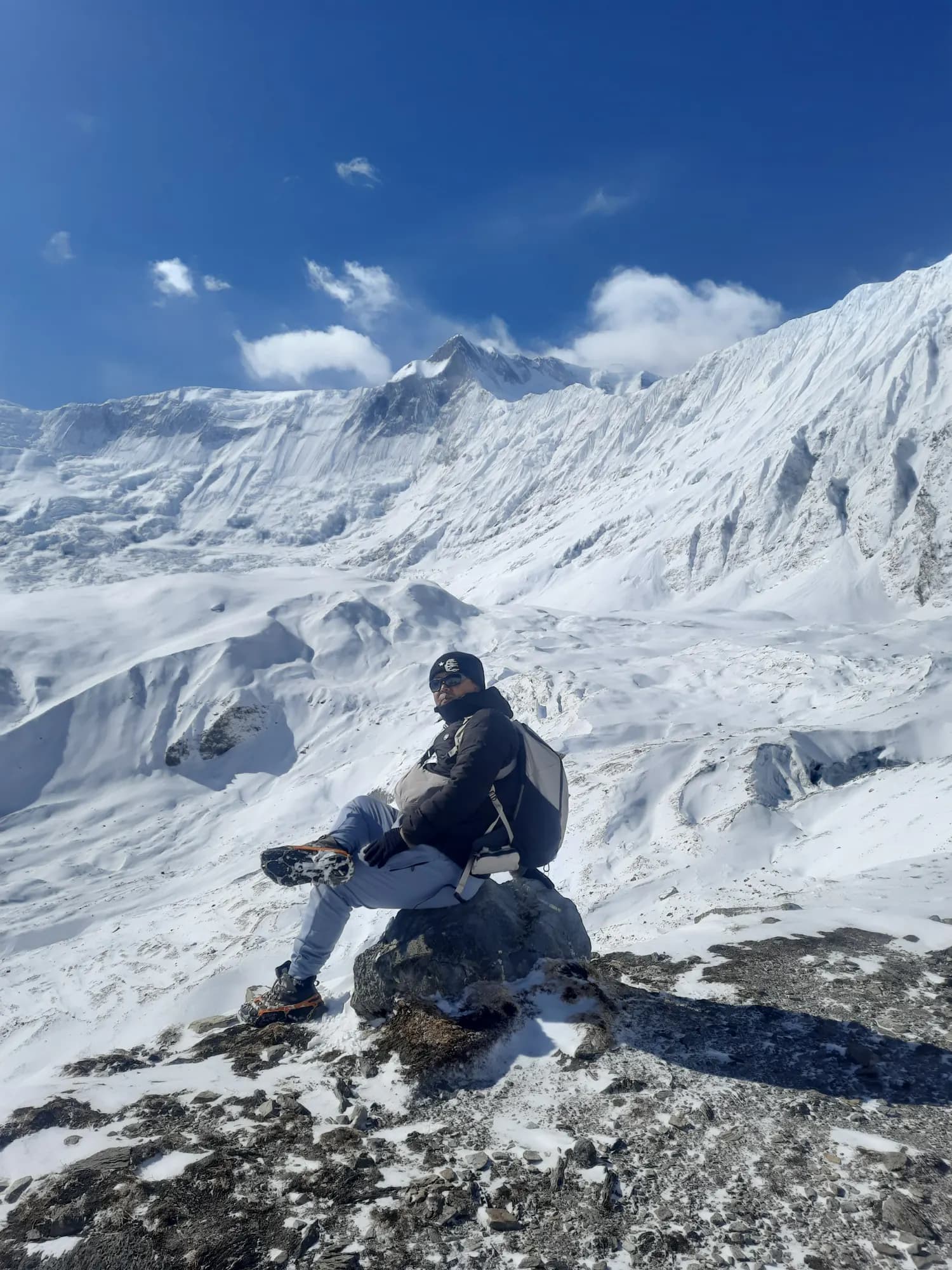
Photographs on this site should be real photographs from real treks on this route, taken by our guides and clients. We do not present stock imagery of another trek as if it were the Annapurna Circuit.
Where an image is a placeholder pending real photography, it is marked as such in our source files and replaced before launch. We do not publish photographs of identifiable people, clients, staff, or people we meet on the trail, without their permission.
What this site does not cover
We write about the Annapurna Circuit. We deliberately do not build depth on other treks here, because a page written to rank rather than to inform is how bad advice spreads. For those, we point you to the site that actually covers them. See the comparison page.
Nothing here is medical advice. It is trek-operator guidance based on the sources named above. For decisions about your own body at altitude, speak to a doctor.
