
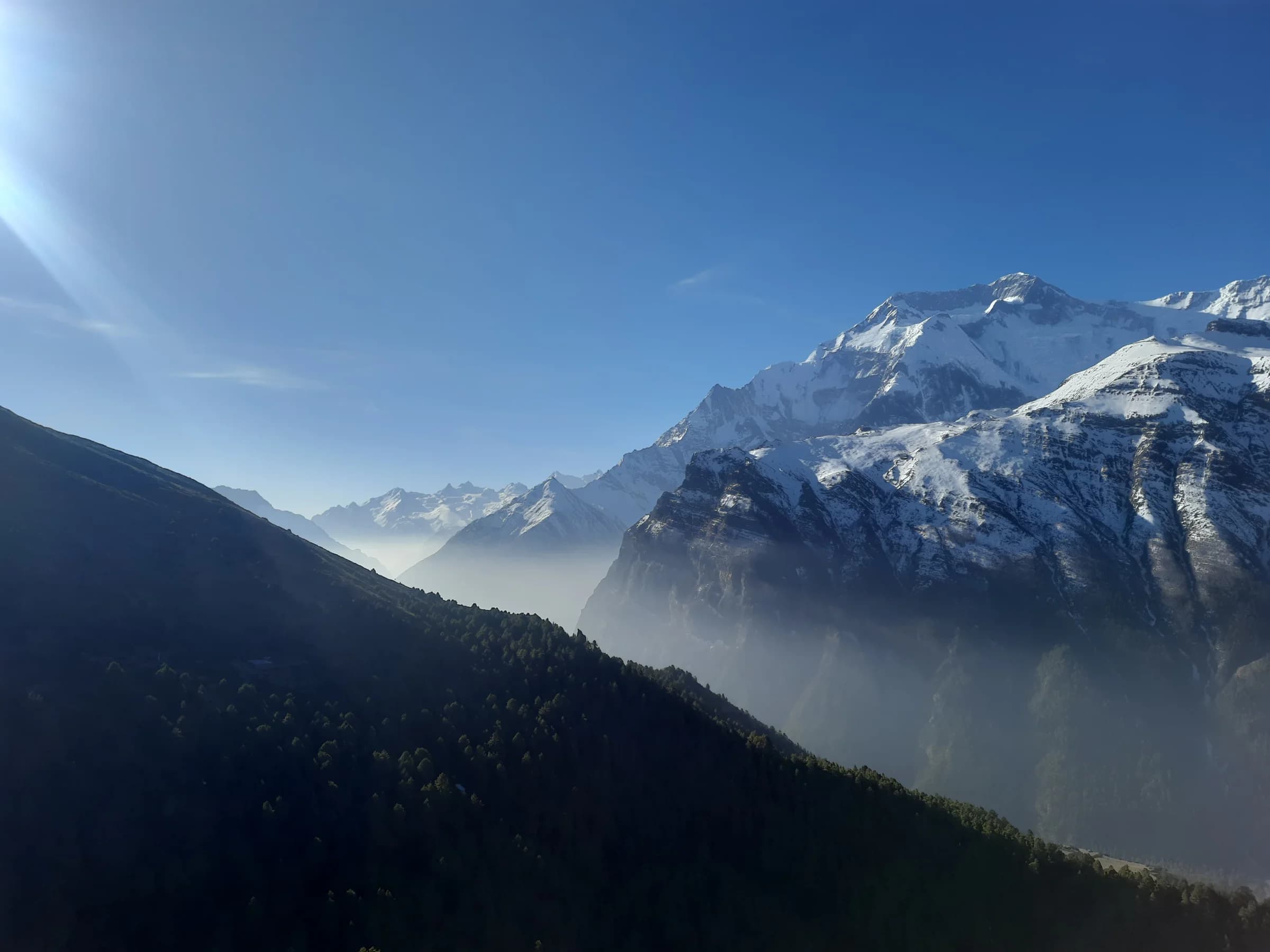
What to pack for the Annapurna Circuit
The Circuit is unusual among Himalayan treks because of how much climate you pass through. You start in subtropical valley at around 1,300 m and cross a high, exposed pass at 5,416 mwhere it can be −20 °C in the wind before sunrise. One packing list has to cover both.
| Porter carries | Up to about 12 kg in a duffel: everything you do not need during the day |
|---|---|
| You carry | A 5–8 kg daypack: water, layers, camera, documents, snacks |
| Sleeping bag | 4-season, comfort-rated to about −15 °C. Hire in Nepal rather than fly with it. |
| The one thing to get right at home | Boots, broken in over weeks, not days |
The genuine mistake most UK trekkers make is not under-packing. It is bringing too much, of the wrong material, and buying a duvet jacket in the UK that they could have hired in Kathmandu for a fraction of the cost.
The layering system, and why Thorong La needs serious gear
Four layers, used in combination rather than all at once:
- Base layer, merino or synthetic, next to skin. Two sets: one to walk in, one to sleep in. Never cotton.
- Mid layer, fleece or light synthetic insulation. Your main walking-warmth layer for most of the trek.
- Shell, waterproof and, more importantly on the pass, windproof. Wind is what makes Thorong La cold, not air temperature alone.
- Duvet jacket, down or synthetic. Worn at teahouses in the evening, and on pass morning. Hire this in Nepal.
The lower valley is warm enough to walk in a base layer. From Manang upward you will use everything you own, and on pass morning you will be wearing all four layers at once before sunrise. See our Thorong La guide for what that morning is really like.
The full packing list
Clothing
| Base layers | 2 sets, merino or synthetic, buy in the UK |
|---|---|
| Trekking trousers | 2 pairs, quick-dry. No jeans. |
| Fleece / mid layer | 1–2, buy in the UK |
| Waterproof shell jacket | 1, windproof, buy in the UK |
| Waterproof overtrousers | 1 pair |
| Duvet jacket | 1, hire in Nepal |
| Trekking socks | 4–5 pairs, wool blend, buy in the UK |
| Underwear | 4–5, quick-dry |
| Warm hat + sun hat | 1 each |
| Gloves | Liner gloves plus insulated mitts for the pass |
| Buff / neck gaiter | 1–2, also for dust in the lower valley |
Feet, bags and sleeping
| Trekking boots | Broken in, ankle support, buy in the UK, well in advance |
|---|---|
| Teahouse shoes | Trainers or sandals for the evening |
| Daypack | 30–35 litres with a rain cover |
| Duffel bag | For the porter, hire in Nepal |
| Sleeping bag | 4-season, hire in Nepal |
| Sleeping bag liner | Adds warmth and keeps a hired bag clean |
| Trekking poles | Genuinely useful on the descent to Muktinath, hire in Nepal |
Everything else
| Head torch | Essential: pass day starts in the dark. Spare batteries. |
|---|---|
| Sunglasses | Category 3–4. Snow glare above Manang is severe. |
| Sun cream + lip balm | SPF 50. UV at 5,000 m is punishing even when it feels cold. |
| Water bottles / bladder | 2–3 litres capacity |
| Water purification | Tablets or a filter, cheaper and greener than buying bottled |
| Power bank | 20,000 mAh. Teahouses charge per device, per hour, and rates rise with altitude. |
| Plug adaptor | Nepal uses types C, D and M |
| Quick-dry towel | Small. Not a bath towel. |
| Wet wipes and hand sanitiser | Showers become scarce and cold higher up |
| Snacks | Whatever you actually like. Appetite drops at altitude and familiar food helps. |
What to buy in the UK vs hire in Nepal
Kathmandu and Pokhara have a mature gear-hire trade. Hiring is cheaper than buying, saves your baggage allowance, and means you are not carrying a duvet jacket you will use for six days of your life.
| Buy in the UK | Boots, base layers, socks, waterproof shell, head torch, sunglasses, sun cream, any personal medication |
|---|---|
| Hire in Nepal | Sleeping bag, duffel bag, duvet jacket, trekking poles, gaiters |
| Buy either | Fleece, hat, gloves, water bottles, cheap in both places |
The rule: anything shaped to your body, buy at home. Anything that is just insulation, hire there.Boots above all: hired boots on a 5,416 m pass day is how trekkers end up with ruined feet at Thorong Phedi.
We can arrange hire for you as part of the trip. Ask when you enquire and it goes on the quote.
Footwear: the most important decision on this list
You will walk for up to two weeks on rocky trails, moraine and, on pass day, possibly snow. Boots are the one item where getting it wrong ruins the trek.
- Buy them months ahead and break them in. Not a week. Walk at least 50–60 miles in them, including hills and descents.
- Ankle support and a stiff-ish sole. The long descent from Thorong La to Muktinath is where soft trail shoes punish you.
- Half a size up from your street size: feet swell at altitude and on long descents.
- Sock system: a thin liner under a wool trekking sock reduces friction, which is what causes blisters.
- Carry a blister kit in your daypack, not the porter's duffel, and treat hot spots the moment you feel them.
UK trekkers are well served here: Cotswold Outdoor, Go Outdoors, Decathlon and independent specialists will all fit boots properly. Get them fitted in person.
Thorong La crossing day: the specialist kit
One day of this trek demands more than the rest. You leave High Camp or Thorong Phedi somewhere around 3–4am, in the dark, in cold that can bite hard before the sun reaches the pass.
- Head torch, tested, with fresh batteries
- Insulated mitts over liner gloves: mitts beat gloves for warmth
- Balaclava or buff plus warm hat: exposed skin is the problem, not core temperature
- Duvet jacket worn from the start, shed as the sun comes up
- Chemical hand and toe warmers: small, light, worth their weight that morning
- Water in an insulated sleeve or inside your jacket: bladder hoses freeze
- Snacks in a pocket, not in the pack you will not want to stop and open
- Sunglasses from first light: snow glare arrives fast
Read the Thorong La crossing guide alongside this section.
Medical kit
Your guide carries a group first-aid kit, a pulse oximeter and oxygen above Manang. What you carry is the personal layer:
- Any prescription medication you take, in original packaging, with a copy of the prescription
- Diamox if your GP or travel clinic has prescribed it. See our altitude sickness guide
- Painkillers: paracetamol and ibuprofen
- Rehydration sachets
- Blister treatment, plasters and a dressing that stays on
- Anti-diarrhoeal and something for indigestion
- Throat lozenges: the dry, dusty air gives almost everyone a cough
- Personal antiseptic and plasters
Nothing here replaces a conversation with your GP or a UK travel clinic before you go, particularly about altitude medication and vaccinations.
Documents and money
- Passport, valid 6+ months beyond entry
- Four passport photos for permits and visa. See permits
- Insurance documents, policy number and the emergency assistance number, on paper and on your phone
- USD cash for the visa on arrival
- Cash for the trail: there are no reliable ATMs above Manang. Draw what you need in Kathmandu or Pokhara.
- A photo of your passport and insurance stored separately from the originals
What not to pack
- Cotton anything: it holds sweat, chills you, and takes days to dry
- Jeans
- A full-size towel
- More than one book
- Too much technology: every device is another thing to charge at teahouse rates
- New boots
- Excess "just in case" clothing: teahouses have laundry lower down, and the porter has a weight limit
